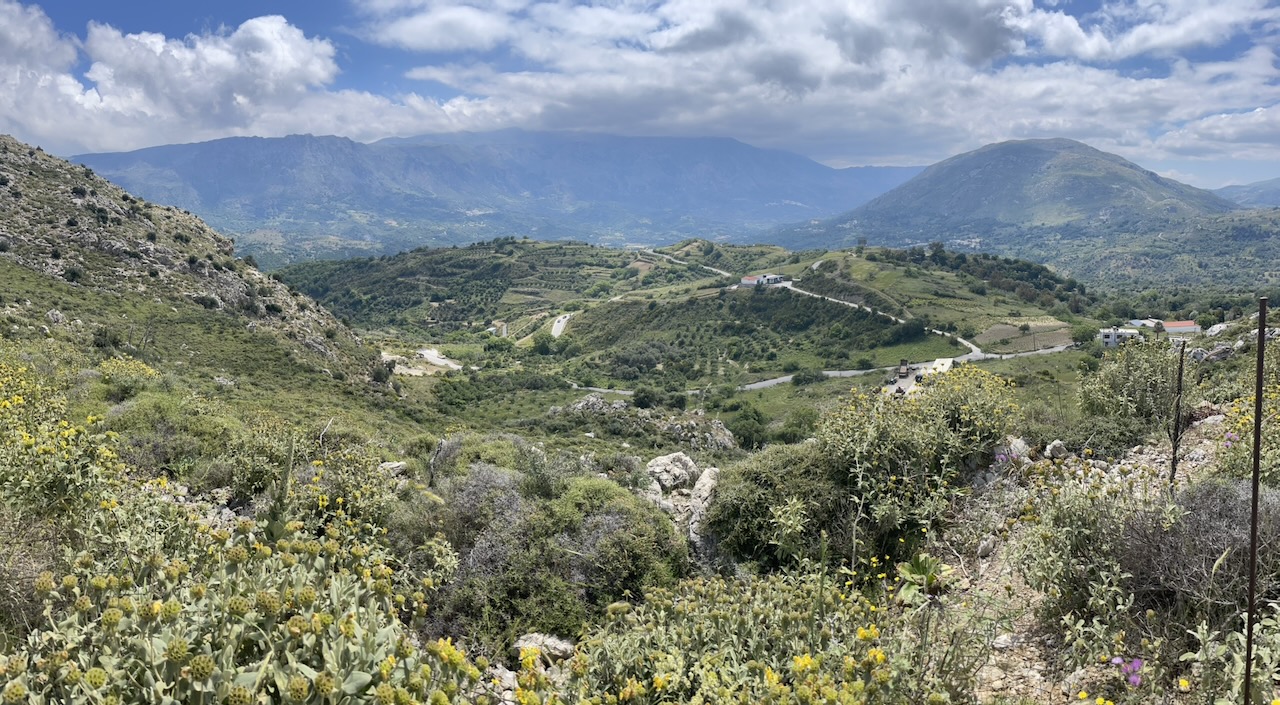
For a village of its size, Meronas holds an outsized share of Byzantine and Venetian Crete. The names on the walls, Kallergis above all, tie this hillside directly to Constantinople and to the long story of Crete under Venice.
The map
Churches around Meronas
Tap a marker. Every pin is placed on real coordinates from OpenStreetMap.
The great church
Panagia: the Dormition of the Virgin
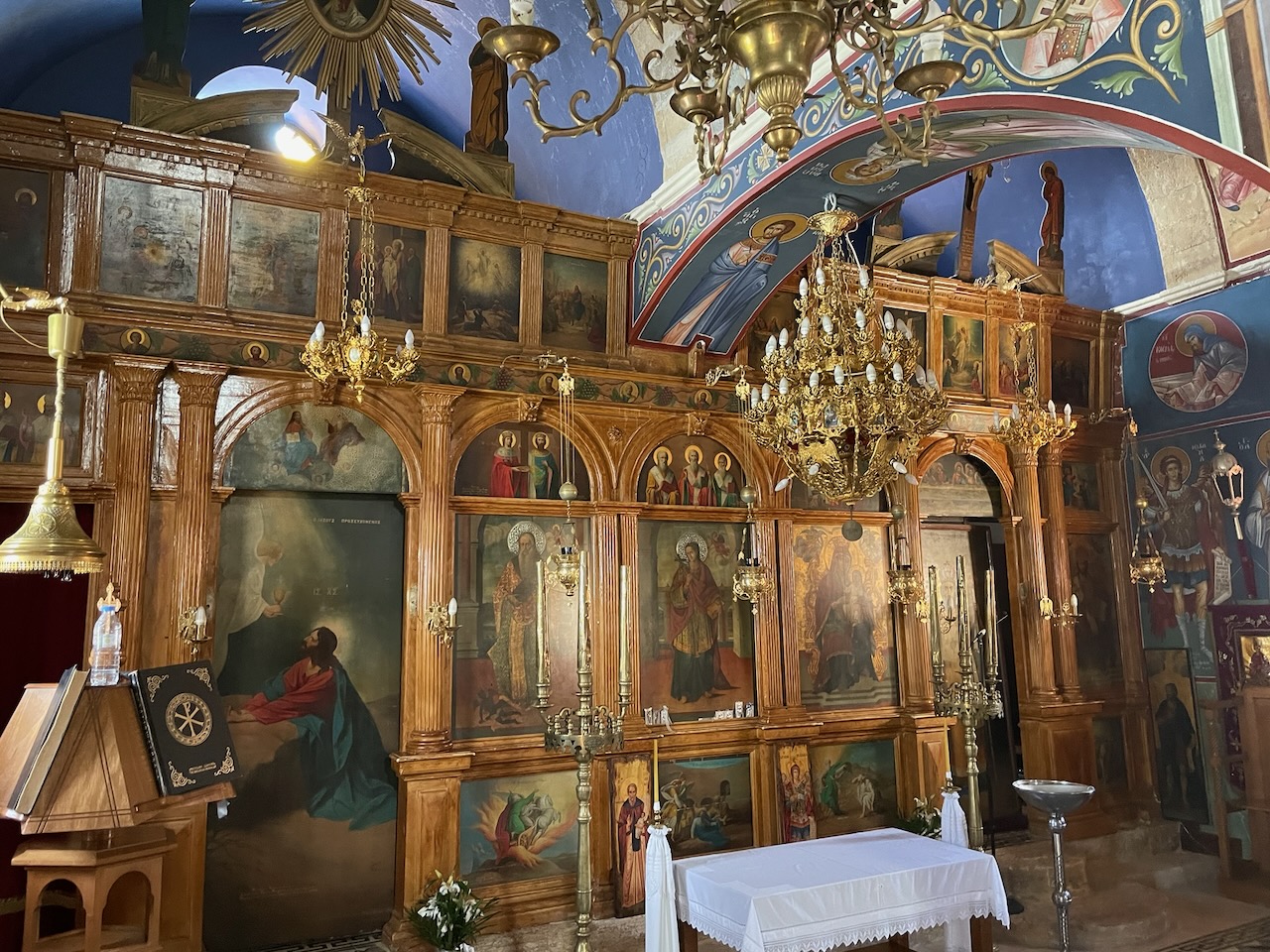
A three-aisled vaulted basilica of the 14th century, and one of the finest Byzantine churches in the Cretan hinterland. The central nave is dedicated to the Dormition of the Virgin, the north aisle to Saint George, and the later south aisle to the Holy Apostles Peter and Paul. A bell tower was added to the south side.
Its frescoes, painted about 1380, are the reason scholars come. The style comes straight from Constantinople: the Kallergis family hired a hagiographer from the capital itself. Look for the scenes of the Transfiguration, the Entry into Jerusalem and the Crucifixion in the nave, the life of Saint George and the twenty-four houses of the Akathist Hymn in the north aisle, and a Tree of Jesse spread across the whole west wall. The Kallergis coat of arms is on the walls; the family likely gave the icon of the Panagia Hodegetria too. There is an academic study of it in Cahiers Archéologiques 55.
More stone and paint
The others
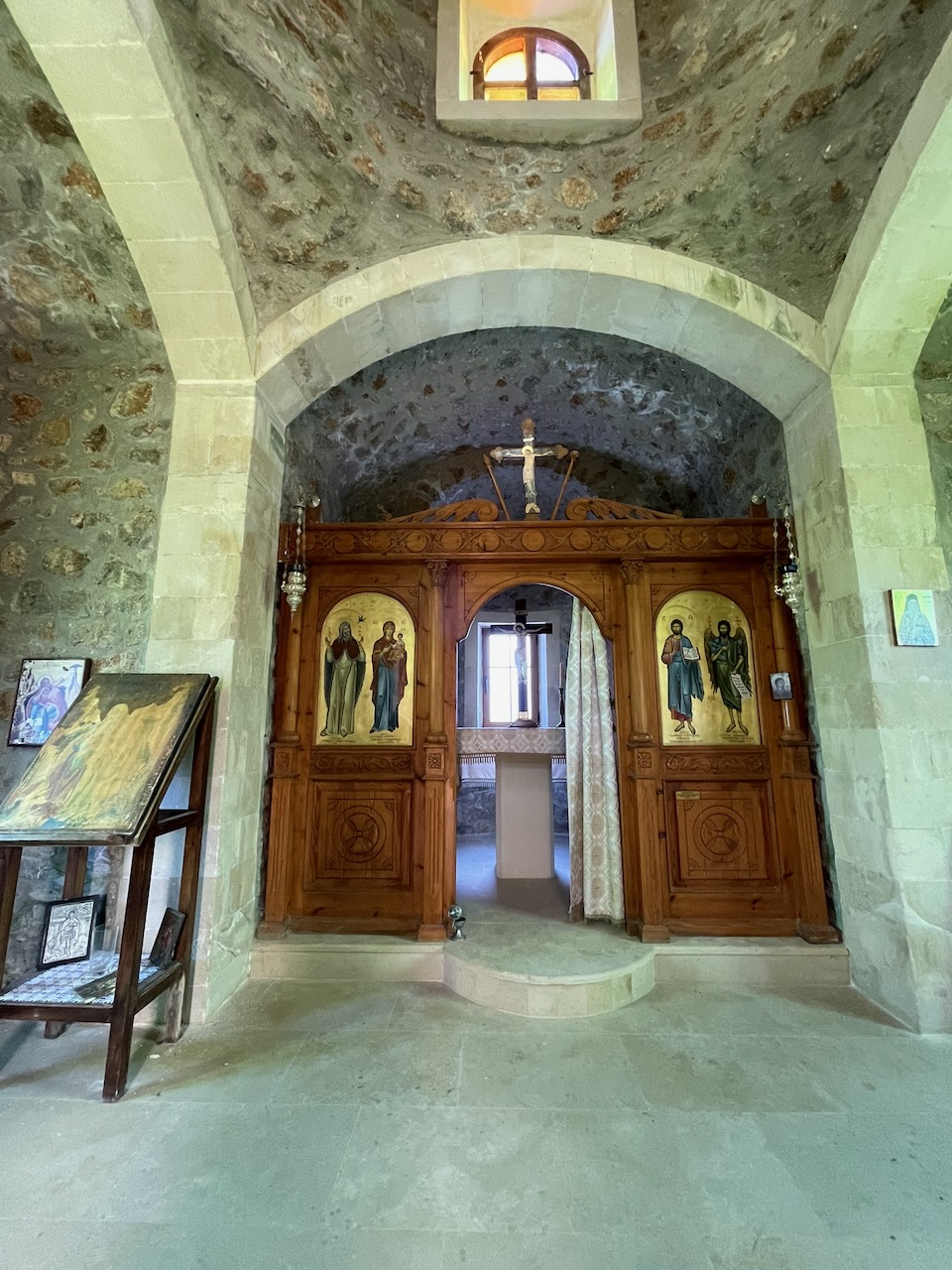
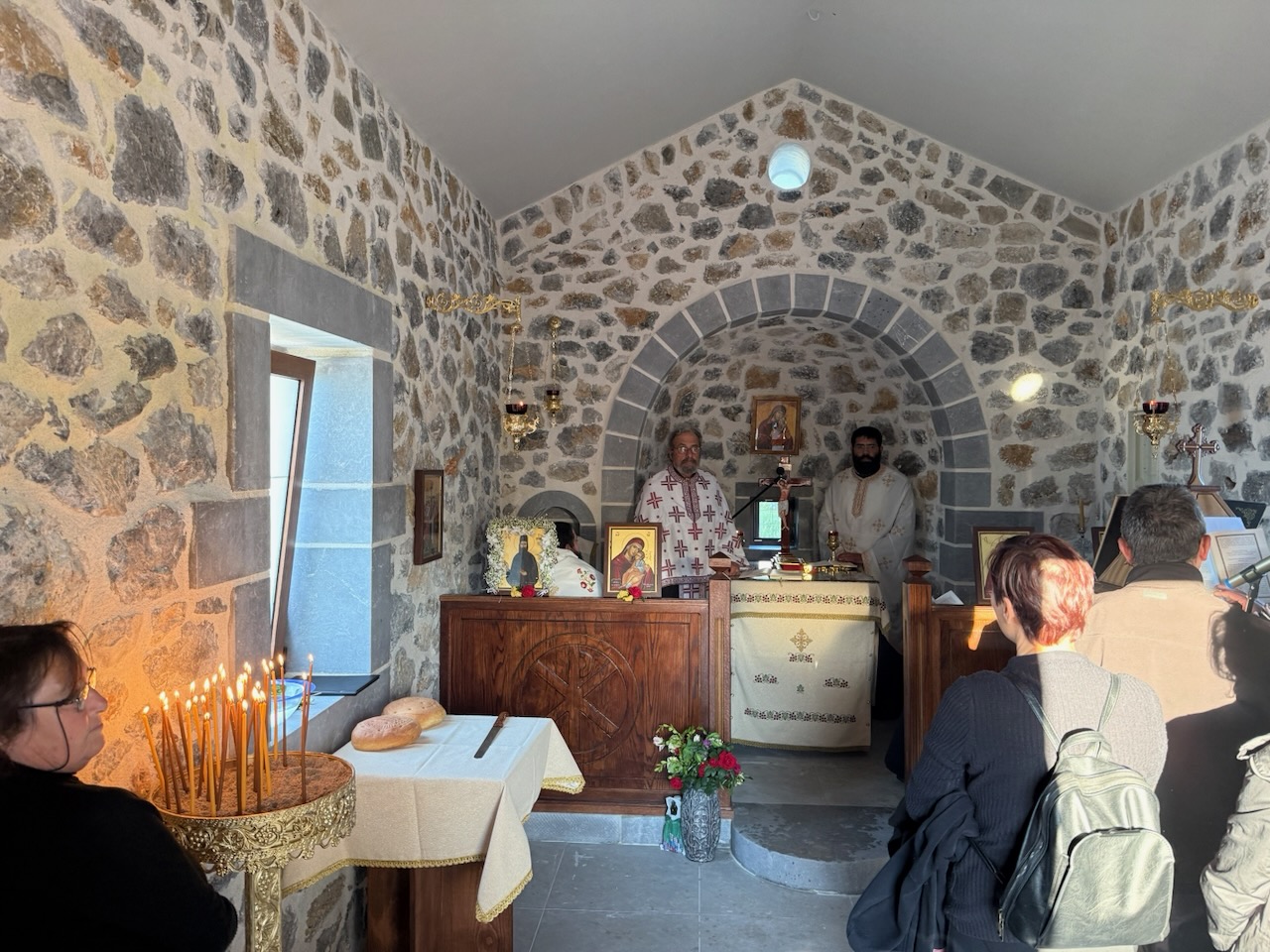
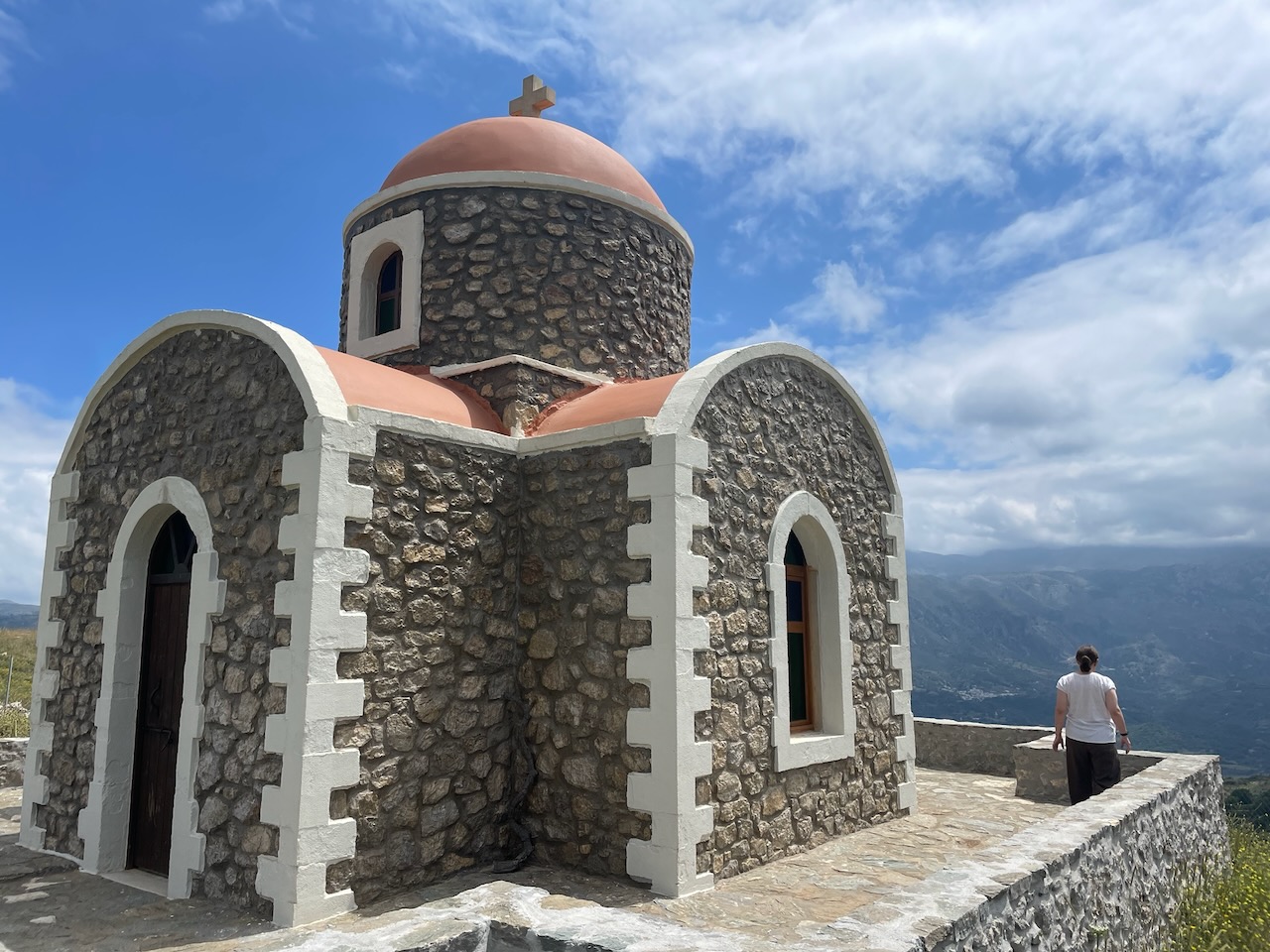
The village keeps its feast on 25 July, the day of Agios Panteleimon, with the traditional panigyri.
The valley around them
The Amari, in brief
The churches sit in one of the greenest, most storied valleys in Crete, a fertile shelf on the foothills of Psiloritis (Mount Ida) and Mount Kedros. People have worked it since the Bronze Age; the city of Phaistos pushed a satellite settlement up into the valley at Monastiraki.
It is also a valley of hard memory. In the Second World War the Amari was a centre of the Cretan resistance. After the abduction of General Kreipe in 1944, German reprisals destroyed villages here and killed more than 160 people. The churches that survived carry that history too.